Hakeem Khalid

De historische ontwikkeling van gokken van dobbelstenen tot online casino’s

Details

De historische ontwikkeling van gokken van dobbelstenen tot online casino’s

Oorsprong van gokken

Gokken is een van de oudste vormen van vermaak en zijn oorsprong gaat terug tot de vroege beschavingen. Archeologische vondsten wijzen erop dat de oude Egyptenaren en Chinezen al duizenden jaren geleden dobbelstenen gebruikten voor spelletjes en gokken. In deze vroegste tijden werd gokken vaak gekoppeld aan religieuze rituelen en beslissingen, waarbij de uitkomst van het spel werd gezien als een teken van de goden. Omdat de wereld zich blijft ontwikkelen, zijn er nu ook opties zoals geen cruks casino, die het gokken verder moderniseren.
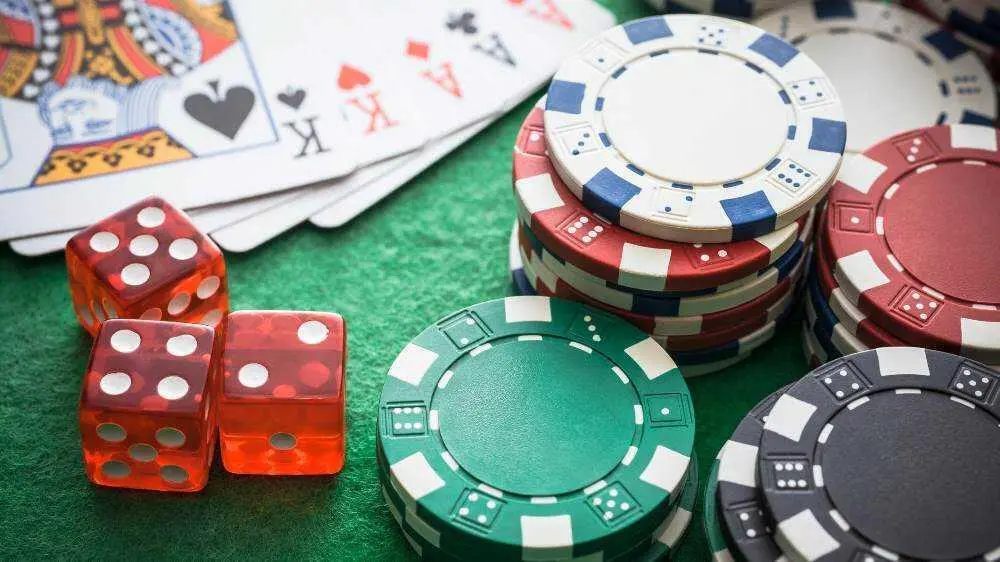
Naarmate de tijd vorderde, verspreidde gokken zich over de wereld. In het oude Rome waren er gokspelen die populair waren onder het volk, en gladiatoren wedden vaak op hun eigen overleven in de arena. Deze vroegste vormen van gokken legden de basis voor meer gestructureerde speelsystemen die later zouden ontstaan.

De opkomst van dobbelspelen

In de middeleeuwen ontwikkelden dobbelspelen zich tot een populair tijdverdrijf onder de aristocratie. De spellen werden vaak gespeeld in salons en op feesten, waar de inzet niet alleen geld maar ook prestige kon zijn. Verschillende varianten van dobbelspelen ontstonden, zoals het gebruik van verschillende soorten dobbelstenen en spelregels. Deze spellen waren een belangrijke sociale activiteit, die niet alleen het vermaak bevorderde, maar ook sociale interactie tussen de deelnemers.

Met de groei van de handel en de opkomst van steden in de Renaissance nam de populariteit van gokken verder toe. Mensen van verschillende achtergronden kwamen samen om te spelen, wat leidde tot de ontwikkeling van meer gestructureerde gokhuizen en cafés waar men kon wedden op verschillende uitkomsten.

De legalisering en regulering van gokken

In de 18e en 19e eeuw begonnen veel landen met het reguleren van gokken. De eerste officiële gokhuizen werden opgericht en de overheid begon belasting te heffen op de gokwinsten. Dit was een manier om inkomsten te genereren en tegelijkertijd de activiteiten te controleren. In deze periode ontstonden ook loterijen die door de staat werden georganiseerd, wat de populariteit van gokken verder vergrootte.

De regulering hielp om gokken te legitimeren, maar bracht ook uitdagingen met zich mee. Er kwamen zorgen over verslaving en criminaliteit, wat leidde tot striktere regels en voorschriften. Ondanks deze uitdagingen bleef gokken een integraal onderdeel van de samenleving en de economie, met een sterke culturele impact in veel landen.

De digitale revolutie van gokken

Met de opkomst van het internet in de jaren ’90 begon de wereld van gokken een enorme transformatie te ondergaan. Online casino’s verschenen en boden spelers de mogelijkheid om vanaf hun eigen huis deel te nemen aan hun favoriete spellen. Dit maakte gokken toegankelijker voor een breder publiek, wat leidde tot een explosieve groei van de online gokindustrie.

Online gokken biedt talloze voordelen, zoals een groter aanbod van spellen, bonussen en promoties. Echter, het heeft ook nieuwe uitdagingen met zich meegebracht, zoals het risico op verslaving en de behoefte aan goede regelgeving. Landen over de wereld hebben geprobeerd om een balans te vinden tussen de voordelen van online gokken en de bescherming van consumenten.

De rol van lokale platforms

Platforms zoals tt-assen.com spelen een belangrijke rol in de promotie van evenementen en activiteiten in lokale gemeenschappen. Ze bieden informatie over lokale gokgelegenheden en evenementen, waardoor bewoners en bezoekers worden aangemoedigd om deel te nemen aan de lokale cultuur en het sociale leven. Door lokale ondernemers en organisaties te ondersteunen, helpen deze platforms bij het versterken van de lokale economie.

De combinatie van online en offline gokken biedt unieke mogelijkheden voor zowel spelers als bedrijven. Terwijl de digitale wereld blijft groeien, blijft de aantrekkingskracht van traditionele gokvormen bestaan, en lokale platforms zorgen ervoor dat dit wordt ondersteund en bevorderd. Gokken blijft dus een dynamisch en veelzijdig onderdeel van onze samenleving.

Blog Categories

Discover the Blogs

Discover life-changing seminars on health, wellness, and prevention, featuring expert insights for better living.

Next Seminar

At Hyderabad on 17 Jan, 2025

9:30 AM to 3:00 PM

Glimpses of Previous Seminars

Here’s a glimpse of our previous seminars, where health experts shared valuable insights on topics like heart health, women’s wellness, kidney care, liver disease prevention, and stomach disorders.

Karachi

AT NED University

Multan

At BZU Multan

Lahore

At Peshawar Auditorium

Next Seminar

At Hyderabad on 17 Jan, 2025

9:30 AM to 3:00 PM

What does temperament of the drugs means?

The temperament of the drugs means the whole chemistry and properties of a drug, its quality of having toxicity or otherwise. The drugs belongs to plant, mineral & animal origin have their own temperaments. Because of the temperament the property of one drug differs from the other.

The different ingredients of a drug have a molecular structure (Surat-Mauiyah). Therefore their temperament is also different. When ingredients of different temperament assemble in a compound drug, they develop and produce a different temperament altogether.

Al-Kindi (A distinguished pharcognosict died in 873 A.D.) established a method to asses the temperament, degrees of compound drugs and illustrated as follows. Cardamom
1 warm ½ cold ½ moist 1 dry
Sugar 2 warm 1 cold 1 moist 2 dry
Indigo ½ warm 1 cold ½ moist 1 dry
Embolica 1 warm 2 cold 1 moist 2 dry
Sum:- 4 ½ warm 4 ½ cold 3 moist 6 dry
Thus the drug is dried to the first degree.

The temperament is a quality of drug it means the drug is hot and cold in touch and vice-versa. It actually means that the drug is potentially or action wise hot in comparison to the body. The potency and degree developed inside the body. The action take place after in-take of drug, which increase or decrease the body temperament, stimulating the thermostat, centre of hypothalamus, by increasing the Basic Metabolic Rates (BMR), by releasing various harmones. A drug is said to be hot because it produces certain symptoms related to heat after intake. A drug is said to be cold when it lowers the temperament by influencing hypothalamus or decreasing the BMR, as such the symptoms produces after intake of drugs of various temperaments attributed to hot, cold, Damp or dry.

In Unani all drugs are defined in temperamental qualities and graded into four degrees according the potency of their qualities as hot, cold, moist (wet) and dry. Thus a hot drug graded in degree one, two, three and four and cold, moist and hot are defined vice-versa. Thus the first and second degree is safe and third have a toxic effect of mild nature and the fourth considered having side-effects or toxic.

For maintaining health it is imperative to maintain temperaments as well. It is also paramount to a physician to keep the temperament in mind while diagnosing a disease. The dominance of one or more humour in the body vitiate humour itself and create a condition i.e. cold disease.

There are various factors which affect the humours. When disturbance in the quantity, quality and equilibrium in one or more humours occurred due to the effect of atmosphere, diet, psychilogical or otherwise it causes disease.

It is the observation, experimentation and experience of ancient physicians who had under taken clinical trials on living beings and treated with single as well as compound drugs. According to the actions, resulted in the human body, observed and examined by the physicians, the temperament was defined and determined.

Drugs of Herbal, Mineral & Animal origin are used. They form a large number of formulations and shape acceptable to the patient.

Drugs are used in crude form as single drugs and compound form.

Because single drug sometime could not give desired effect and results, they can give less and sometime severe action. A drug of compound ingredients counteract the toxic effect of chemically active principle and act as antidote and enhance the required action of other single drugs.
On combination of multiple drugs in a formula having different qualities and active principles of mild or severe nature interact with each other. In the process the toxic effects or side-effects reduce to nil therefore the trend continue.

In Unani drug sugar or honey is the base as a preservative. So if the preservative are standard then the drug retain the quality, efficacy and also retain the life for more than one year. The methods of preparation of compound drugs, preservatives are described in detail in NFUM, Part-I.

All the drugs used in compound formulations are safe & non-toxic. These drugs are prepared according to the specific process & methods. Before preparation of Unani drugs toxicity of drugs are kept in mind and so the toxic ingredient are purified and de-toxified. Due to this process the toxicity is reduced to nil and the efficacy remains. Hence, the Unani drugs are absolutely safe.

The medicinal plants are a type of vegetation for example some fruit or vegetables are used to stop diarrhoea and some are administered to increase hemoglobin in anemia. There action is fast. As such Unani medicines take effective action in the patients of acute diseases as well as of chronic diseases.
In the following acute conditions Unani drugs take immediate action.
I. Indigestion, Acidity, Flatulence
II. Diarrhoea
III. Dysentery
IV. Bronchitis
V. Coryza and Cattarrh
VI. Abdominal pain
VII. Urticaria and other ailments
The misconception that the Unani drugs act only in chronic diseases is absolutely in-correct. The Arthritis, Bronchial Asthma, Sinusitis, Hepatitis etc. becomes chronic due to repeated administration of allopathic drugs. These can be cured in acute condition by Unani drugs. As almost all the Unani drugs are used orally or locally and injectables are not used in the system, therefore they act like the allopathic drugs through the same route.

Ecological & environmental factors affect the balance of humours in the body and also vitiate them. Maintenance of humour and promotion and preservation of health depends on six essentials which influence the living being with respect to preservation of health and causation of disease.
The Six Essentials (Asbab-e-Sitt-e-Zarooriya) are:-
I. Hawa-e-Muhit (atmospheric air)
II. Makul-vo-Mashrub (food & drink)
III. Harkat-vo-sakun badni (physical movement & rest)
IV. Harkat-vo-Sakun al-Nafsani (Mental movement and rest)
V. Naum vo-Yaqzah (Sleep and wakefulness)
VI. Istifragh-vo-Ihtibas (Evacuation & retention).

Diagnosis is involved investigation of the cause of disease through pulse reading, naked eye examination of urine & stool and through the other conventional methods i.e. auscultation, palpation, percussion with the help of some modern tools. Thus, the spot diagnosis is made very easy.

Modes of treatment are four. I. Regimenal therapy
II. Dieto therapy
III. Pharmaco therapy
IV. Surgery.

Regimens are five as under.
I. Exercise
II. Massage
III. Hammam
IV. Douches
V. Regimen of Geriatrics
Hammam and massage therapy is available in Govt. Nizamia General Hospital (Unani) Hyderabad, Andhra Pradesh.
Cupping therapy as another speciality treatment of Unani is available in Central Research Instt., (CCRUM) Hyderabad, A.P.

Frequently Asked Questions