Hakeem Khalid

Debunking common myths about gambling The facts you need to know

Details

Debunking common myths about gambling The facts you need to know

Understanding the Odds

One of the most prevalent myths about gambling is that players can influence the outcome of games, particularly in games of chance. Many believe that skillful play or certain strategies can tip the odds in their favor. However, most games, such as slots and roulette, are designed to be random, governed by probability rather than personal skill. This misunderstanding can lead to unrealistic expectations and potential financial losses. Many players might think they can turn to an online casino australia to improve their chances, which only perpetuates the myth.
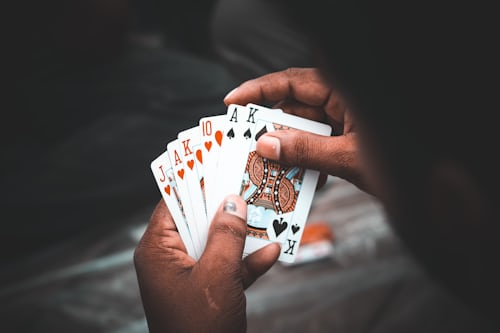
The reality is that casinos and gaming establishments set odds that ensure a house advantage, meaning the longer you play, the more likely you are to lose money. Understanding the odds is essential for anyone engaging in gambling, as it promotes informed decisions rather than reliance on myths and misconceptions.

Gambling as a Form of Entertainment

Another common myth is that gambling is a reliable way to make money. While some individuals may have experienced short-term wins, viewing gambling purely as a source of income is misleading. Many experts emphasize that gambling should be seen primarily as a form of entertainment, akin to spending money on a night out. This perspective encourages responsible gambling, helping players manage their expectations and prevent significant financial loss.

The entertainment aspect of gambling can also lead to psychological benefits, such as excitement and social interaction. However, it is crucial to maintain a healthy perspective and not allow the thrill of potential winnings to overshadow the associated risks.

The Illusion of Control

People often fall victim to the illusion of control, believing they can predict outcomes based on previous results. This myth suggests that past performances can somehow influence future events in games like poker or blackjack. In reality, the outcomes of these games are determined by chance and probability, rendering such beliefs unfounded.

Recognizing this illusion is vital for those involved in gambling, as it can significantly impact decision-making. Players might become overly confident or develop harmful betting patterns based on perceived control, ultimately leading to negative consequences for their finances and mental health.

The Stigma Surrounding Gambling Addiction

There is a persistent stigma attached to gambling addiction, often leading to misunderstandings about its nature. Many believe that gambling addiction is merely a lack of self-control or weakness. In truth, gambling addiction is a recognized mental health disorder that can affect anyone, regardless of their background or personality. It stems from complex psychological and environmental factors, not solely from an individual’s character.

Acknowledging gambling addiction as a serious issue is essential for fostering a supportive environment for those affected. By breaking down stigma, individuals are more likely to seek help and engage in discussions about responsible gambling practices and resources available for those struggling.

About Our Website

Our website aims to provide accurate information about gambling and its associated myths, promoting responsible gaming. We understand that misinformation can lead to harmful behaviors, and our goal is to educate individuals on the psychological effects of gambling and the realities behind the games they play.

By staying informed and challenging misconceptions, players can make better decisions that enhance their gambling experience. We invite you to explore our resources and learn more about the truths and myths surrounding gambling, ensuring a safer and more enjoyable experience for everyone involved.

Blog Categories

Discover the Blogs

Discover life-changing seminars on health, wellness, and prevention, featuring expert insights for better living.

Next Seminar

At Hyderabad on 17 Jan, 2025

9:30 AM to 3:00 PM

Glimpses of Previous Seminars

Here’s a glimpse of our previous seminars, where health experts shared valuable insights on topics like heart health, women’s wellness, kidney care, liver disease prevention, and stomach disorders.

Karachi

AT NED University

Multan

At BZU Multan

Lahore

At Peshawar Auditorium

Next Seminar

At Hyderabad on 17 Jan, 2025

9:30 AM to 3:00 PM

What does temperament of the drugs means?

The temperament of the drugs means the whole chemistry and properties of a drug, its quality of having toxicity or otherwise. The drugs belongs to plant, mineral & animal origin have their own temperaments. Because of the temperament the property of one drug differs from the other.

The different ingredients of a drug have a molecular structure (Surat-Mauiyah). Therefore their temperament is also different. When ingredients of different temperament assemble in a compound drug, they develop and produce a different temperament altogether.

Al-Kindi (A distinguished pharcognosict died in 873 A.D.) established a method to asses the temperament, degrees of compound drugs and illustrated as follows. Cardamom
1 warm ½ cold ½ moist 1 dry
Sugar 2 warm 1 cold 1 moist 2 dry
Indigo ½ warm 1 cold ½ moist 1 dry
Embolica 1 warm 2 cold 1 moist 2 dry
Sum:- 4 ½ warm 4 ½ cold 3 moist 6 dry
Thus the drug is dried to the first degree.

The temperament is a quality of drug it means the drug is hot and cold in touch and vice-versa. It actually means that the drug is potentially or action wise hot in comparison to the body. The potency and degree developed inside the body. The action take place after in-take of drug, which increase or decrease the body temperament, stimulating the thermostat, centre of hypothalamus, by increasing the Basic Metabolic Rates (BMR), by releasing various harmones. A drug is said to be hot because it produces certain symptoms related to heat after intake. A drug is said to be cold when it lowers the temperament by influencing hypothalamus or decreasing the BMR, as such the symptoms produces after intake of drugs of various temperaments attributed to hot, cold, Damp or dry.

In Unani all drugs are defined in temperamental qualities and graded into four degrees according the potency of their qualities as hot, cold, moist (wet) and dry. Thus a hot drug graded in degree one, two, three and four and cold, moist and hot are defined vice-versa. Thus the first and second degree is safe and third have a toxic effect of mild nature and the fourth considered having side-effects or toxic.

For maintaining health it is imperative to maintain temperaments as well. It is also paramount to a physician to keep the temperament in mind while diagnosing a disease. The dominance of one or more humour in the body vitiate humour itself and create a condition i.e. cold disease.

There are various factors which affect the humours. When disturbance in the quantity, quality and equilibrium in one or more humours occurred due to the effect of atmosphere, diet, psychilogical or otherwise it causes disease.

It is the observation, experimentation and experience of ancient physicians who had under taken clinical trials on living beings and treated with single as well as compound drugs. According to the actions, resulted in the human body, observed and examined by the physicians, the temperament was defined and determined.

Drugs of Herbal, Mineral & Animal origin are used. They form a large number of formulations and shape acceptable to the patient.

Drugs are used in crude form as single drugs and compound form.

Because single drug sometime could not give desired effect and results, they can give less and sometime severe action. A drug of compound ingredients counteract the toxic effect of chemically active principle and act as antidote and enhance the required action of other single drugs.
On combination of multiple drugs in a formula having different qualities and active principles of mild or severe nature interact with each other. In the process the toxic effects or side-effects reduce to nil therefore the trend continue.

In Unani drug sugar or honey is the base as a preservative. So if the preservative are standard then the drug retain the quality, efficacy and also retain the life for more than one year. The methods of preparation of compound drugs, preservatives are described in detail in NFUM, Part-I.

All the drugs used in compound formulations are safe & non-toxic. These drugs are prepared according to the specific process & methods. Before preparation of Unani drugs toxicity of drugs are kept in mind and so the toxic ingredient are purified and de-toxified. Due to this process the toxicity is reduced to nil and the efficacy remains. Hence, the Unani drugs are absolutely safe.

The medicinal plants are a type of vegetation for example some fruit or vegetables are used to stop diarrhoea and some are administered to increase hemoglobin in anemia. There action is fast. As such Unani medicines take effective action in the patients of acute diseases as well as of chronic diseases.
In the following acute conditions Unani drugs take immediate action.
I. Indigestion, Acidity, Flatulence
II. Diarrhoea
III. Dysentery
IV. Bronchitis
V. Coryza and Cattarrh
VI. Abdominal pain
VII. Urticaria and other ailments
The misconception that the Unani drugs act only in chronic diseases is absolutely in-correct. The Arthritis, Bronchial Asthma, Sinusitis, Hepatitis etc. becomes chronic due to repeated administration of allopathic drugs. These can be cured in acute condition by Unani drugs. As almost all the Unani drugs are used orally or locally and injectables are not used in the system, therefore they act like the allopathic drugs through the same route.

Ecological & environmental factors affect the balance of humours in the body and also vitiate them. Maintenance of humour and promotion and preservation of health depends on six essentials which influence the living being with respect to preservation of health and causation of disease.
The Six Essentials (Asbab-e-Sitt-e-Zarooriya) are:-
I. Hawa-e-Muhit (atmospheric air)
II. Makul-vo-Mashrub (food & drink)
III. Harkat-vo-sakun badni (physical movement & rest)
IV. Harkat-vo-Sakun al-Nafsani (Mental movement and rest)
V. Naum vo-Yaqzah (Sleep and wakefulness)
VI. Istifragh-vo-Ihtibas (Evacuation & retention).

Diagnosis is involved investigation of the cause of disease through pulse reading, naked eye examination of urine & stool and through the other conventional methods i.e. auscultation, palpation, percussion with the help of some modern tools. Thus, the spot diagnosis is made very easy.

Modes of treatment are four. I. Regimenal therapy
II. Dieto therapy
III. Pharmaco therapy
IV. Surgery.

Regimens are five as under.
I. Exercise
II. Massage
III. Hammam
IV. Douches
V. Regimen of Geriatrics
Hammam and massage therapy is available in Govt. Nizamia General Hospital (Unani) Hyderabad, Andhra Pradesh.
Cupping therapy as another speciality treatment of Unani is available in Central Research Instt., (CCRUM) Hyderabad, A.P.

Frequently Asked Questions